《節奏繞纏》紀柏豪 × 工研院藝術進駐
紀柏豪於工研院藝術進駐期間發展《節奏繞纏》,將呼吸、握力與上肢動作等生理訊號轉為聲音,並把復健輔具同動車改造成會發聲的互動裝置。內含摺頁電子版與 2026 科藝未來沙龍講座式表演。

《節奏繞纏》是紀柏豪在「藝術家進駐工研院計畫」中發展的作品,從身體出發,探索如何將呼吸、握力與上肢動作等生理訊號轉換為聲音,讓聲音不只是動作的回應,也成為理解自身狀態、感知他人節奏的媒介。
摺頁設計|胡貽斐
插畫|黃莉棋
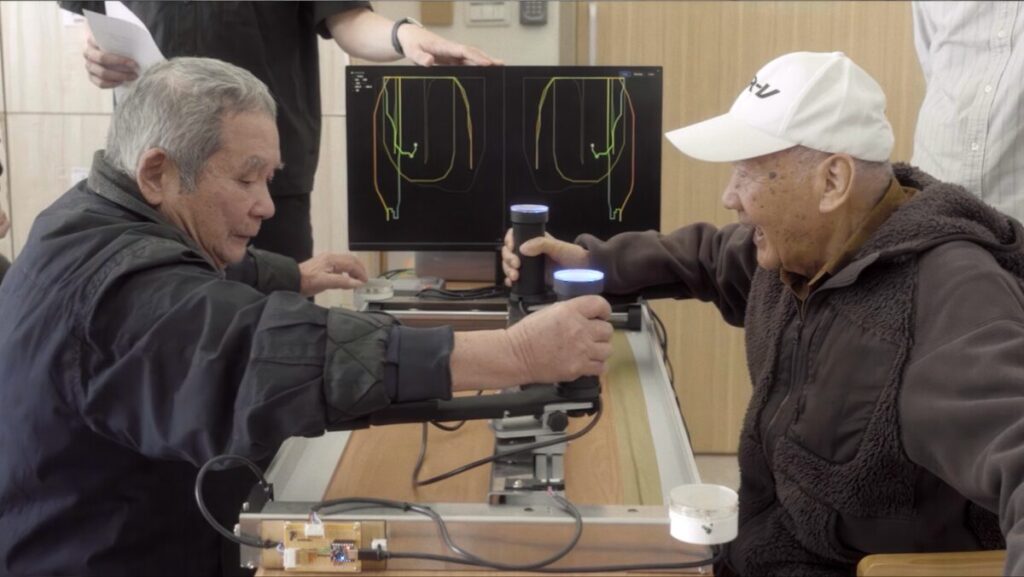
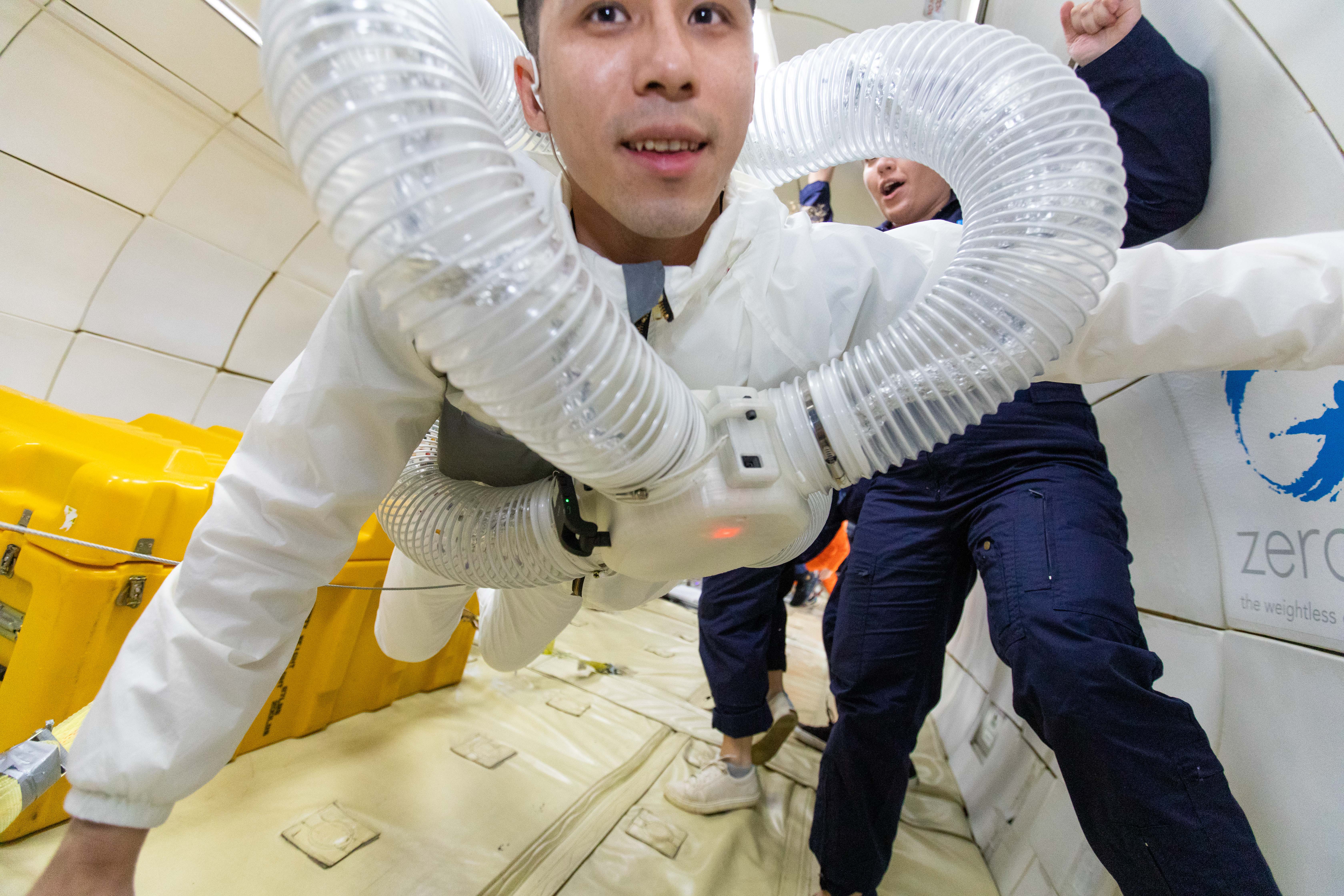
進駐期間,我們與工研院音樂與動作互動健促實驗室合作,從呼吸、脈搏、肌電與動作等感測開始測試並製作原型,再聚焦於穿戴負擔較低的手部移動與施力。同動車是富伯生醫開發的上肢復健輔具,工研院實驗室在裝置上加入動作追蹤與數據紀錄,我們再將它改造成能夠發出聲音的互動裝置。透過移動、推拉與握持等動作,參與者可以演奏音樂,並在過程中感受身體訊號如何轉化為聲音。原本抽象、難以直接察覺的生理數據,因而有了可以聆聽與體驗的形式。
當兩個人一起操作裝置,即使進行相同的動作,身體所展現的力量、協調與節奏仍可能有所不同。聲音讓這些差異逐漸浮現,也讓參與者有機會重新感受自己的身體,並留意他人的狀態與動作。透過感測、聲音與互動的結合,《節奏繞纏》嘗試將健康促進的關懷帶入藝術體驗,並以工作坊作為交流的場域,讓不同身體經驗的人們能夠共同參與、探索與感知。
呼吸是持續發生、卻經常被忽略的身體活動。它隨著情緒、姿勢與身體狀態改變,也在不知不覺中形成每個人獨特的節奏。
「節奏水煙」以雲朵與泡泡為意象,設計一個透過吹氣操作的互動裝置。參與者將氣息吹入裝置,呼吸的變化便轉化為虛擬唱盤上的視覺軌跡,並進一步生成旋律、節奏與聲音。透過有意識地調整呼吸,參與者可以觀察氣息如何改變畫面,也能聆聽自己的呼吸如何形塑聲音。
當不同參與者輪流或共同體驗,呼吸不再只是個人身體內部的生理活動,而成為一種能夠被看見、聽見與分享的表達方式。每個人的氣息都有不同的速度、強弱與節奏,而這些差異也能在聲音與視覺的轉譯中逐漸顯現。
我們希望透過這樣的互動,邀請參與者暫時放慢日常的步調,重新注意自己的呼吸,也留意他人的節奏。
同一個動作由不同的人完成,所需要的力氣、協調能力與觸覺判斷都可能有所不同。抓握、扭轉、推拉,看似簡單的日常動作,其實也承載著年齡、身體狀態與生活經驗所留下的痕跡。
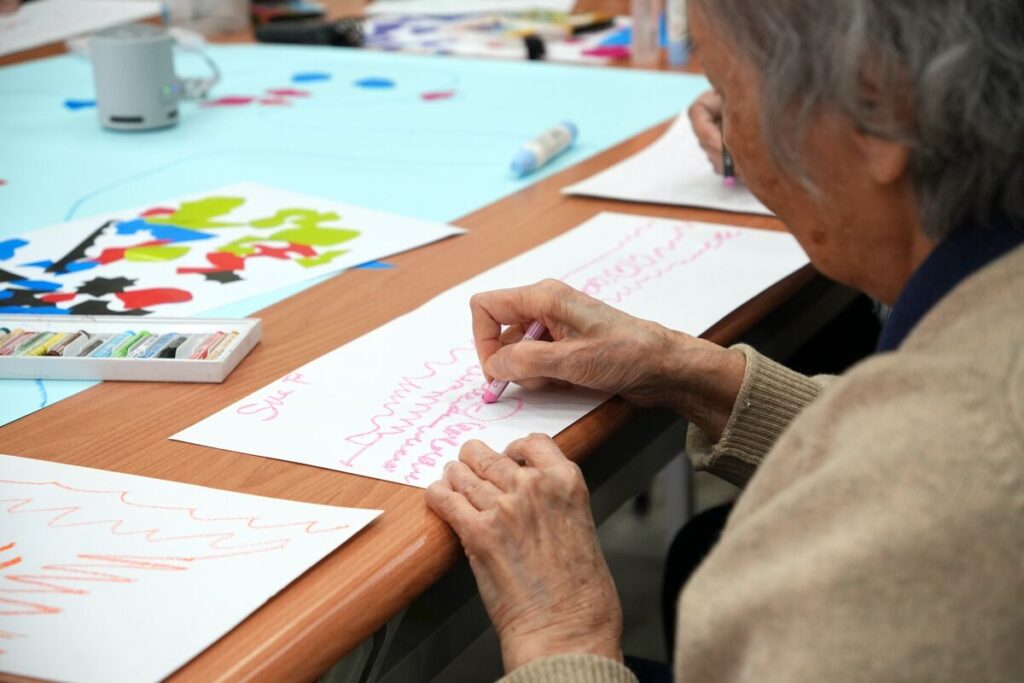
2026 年 3 月 12 日,我們在新北市淡水義山公共托老中心舉辦工作坊,從「手」出發,邀請參與者描繪自己的手部輪廓,並以此為起點,分享手在日常生活中的記憶與經驗。從手曾經做過的事,到不同生命階段的身體變化,參與者逐漸將看似平凡的動作,連結到各自獨特的生活故事。
這些經驗未必能被感測器完整捕捉,也難以單靠數據衡量,卻是理解身體不可或缺的一部分。每個人如何感受自己的身體,又如何在生活中與他人互動,仍有許多無法被量化的部分。
因此,我們希望聲音不只是生理數據的呈現方式,也能成為連結不同身體與生命經驗的媒介。透過共同操作、聆聽與交流,原本不容易被察覺的動作差異與身體節奏,得以被感受與分享。
除了互動裝置,我們也製作了介紹感測器原理與生理數據量測方式的摺頁,讓參與者在體驗之外,能進一步理解聲音背後的身體訊號。
10 月 15 日,我們以講座式表演與靜態展覽,呈現本計畫從技術開發、工作坊實作到創作轉譯的過程。
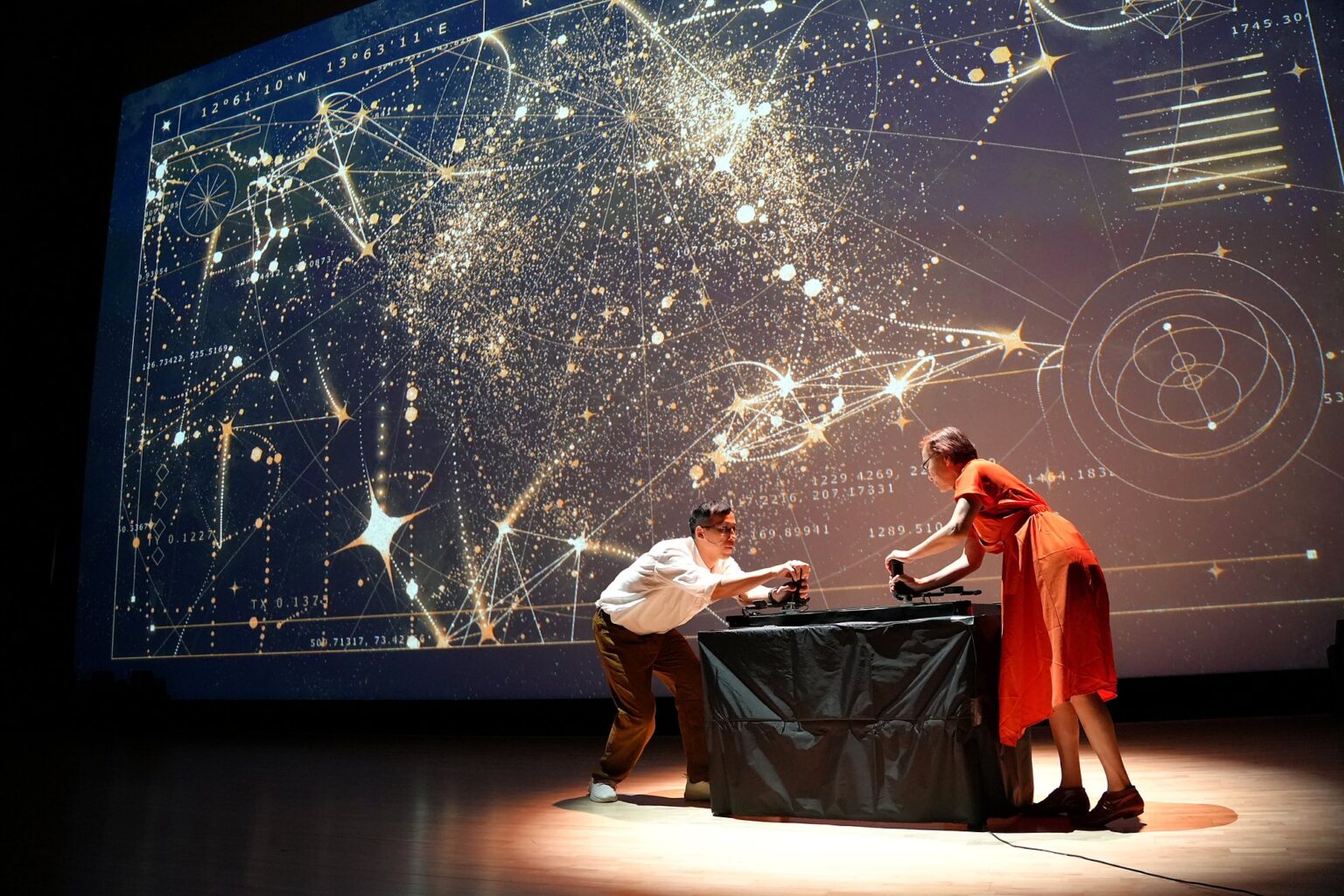
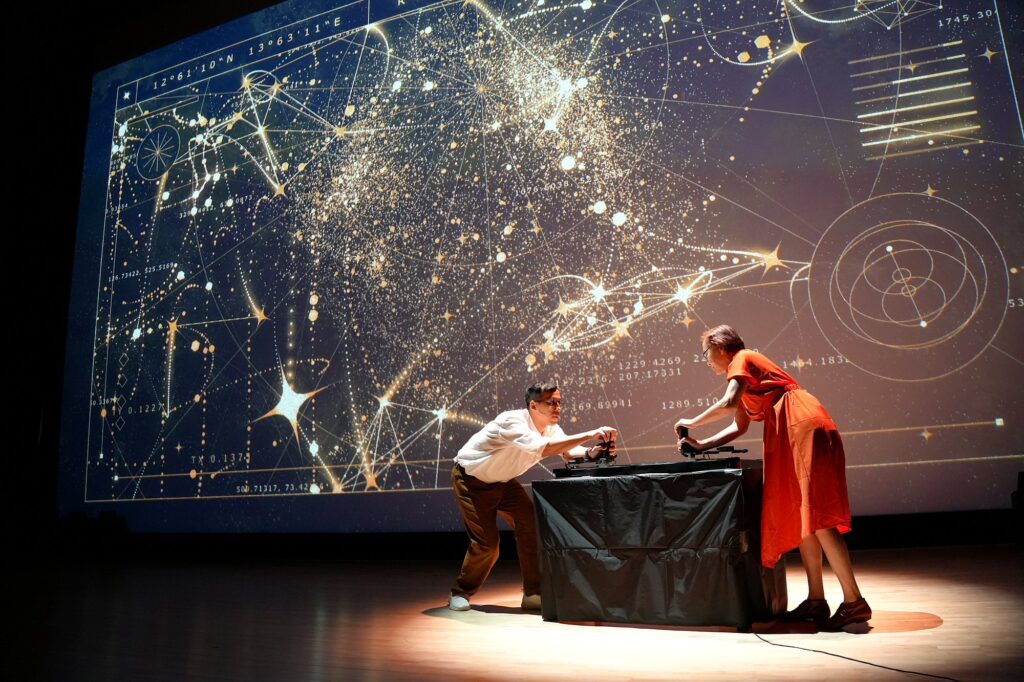
在本次成果發表中,我們與莫比斯圓環創作公社合作,邀請素人長者分享故事並參與排練,將田野觀察發展為講座式表演。演出結合同動車操作、科技聲響、即時影像與現場講述,把復健動作轉譯為聲音、影像與記憶的交織。整場以「手」作為人類感知世界與建立關係的起點,從嬰兒的抓握、學寫字,到年紀漸長後握力與觸覺的變化,回望一雙手如何在時間與經驗中不斷改變。
數據刻度或許能記錄身體能力的變化,卻無法完整呈現一雙手曾經走過的軌跡,以及其中流動的生命經驗。當復健動作成為召喚記憶的媒介,身體不再只是被測量與矯正的對象,也成為承載個人經驗、連結他人與世界的所在。
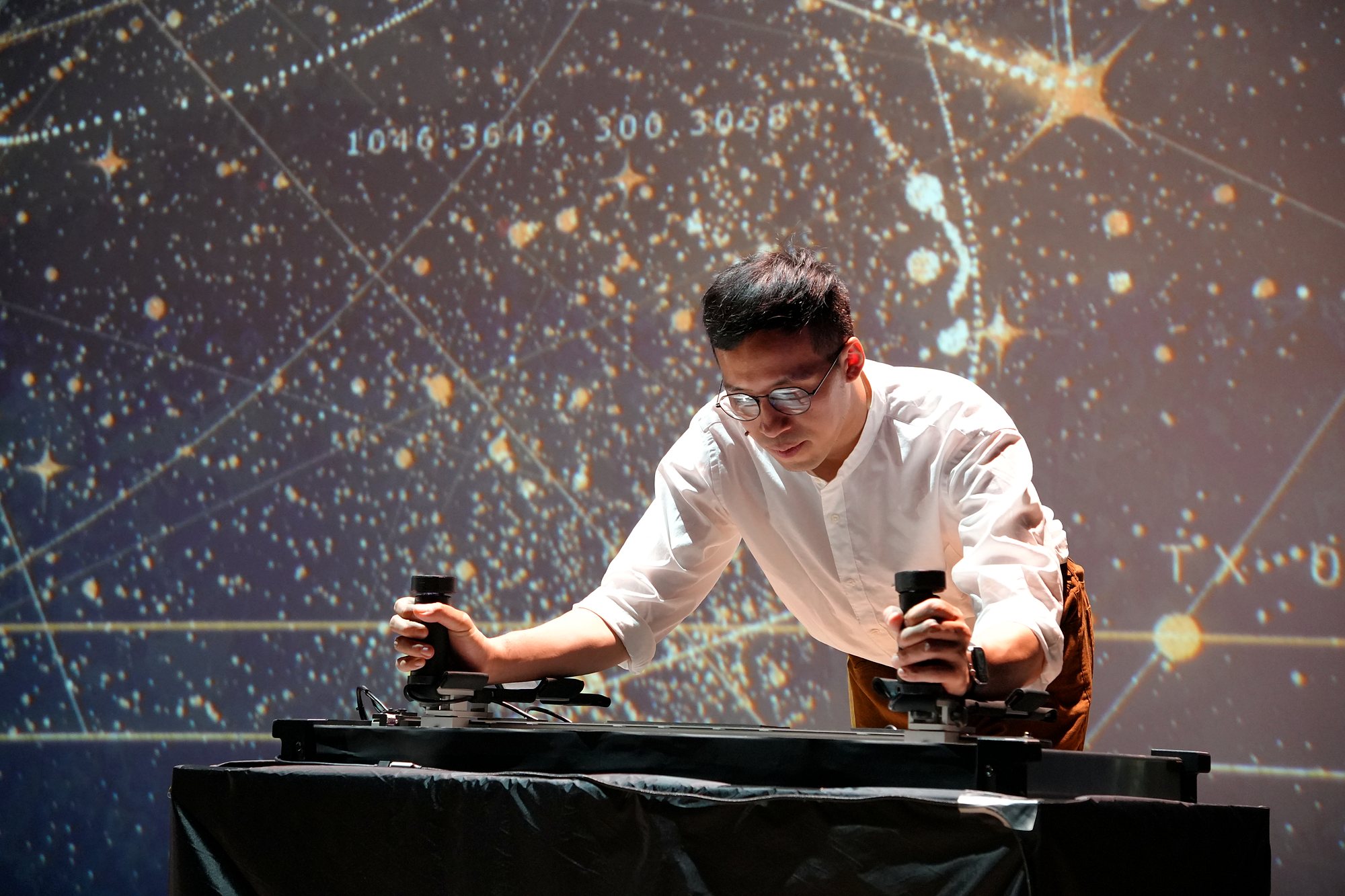
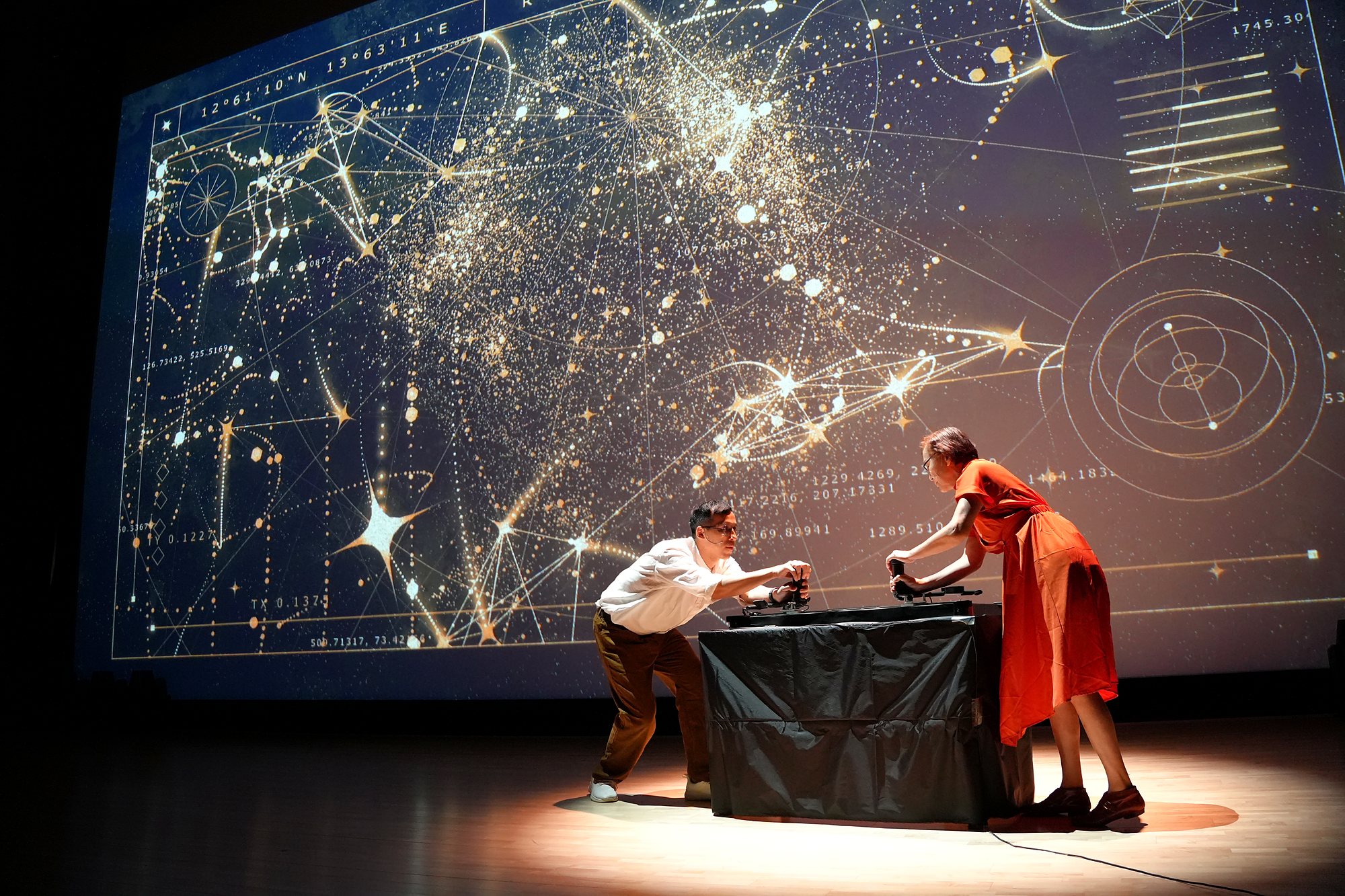
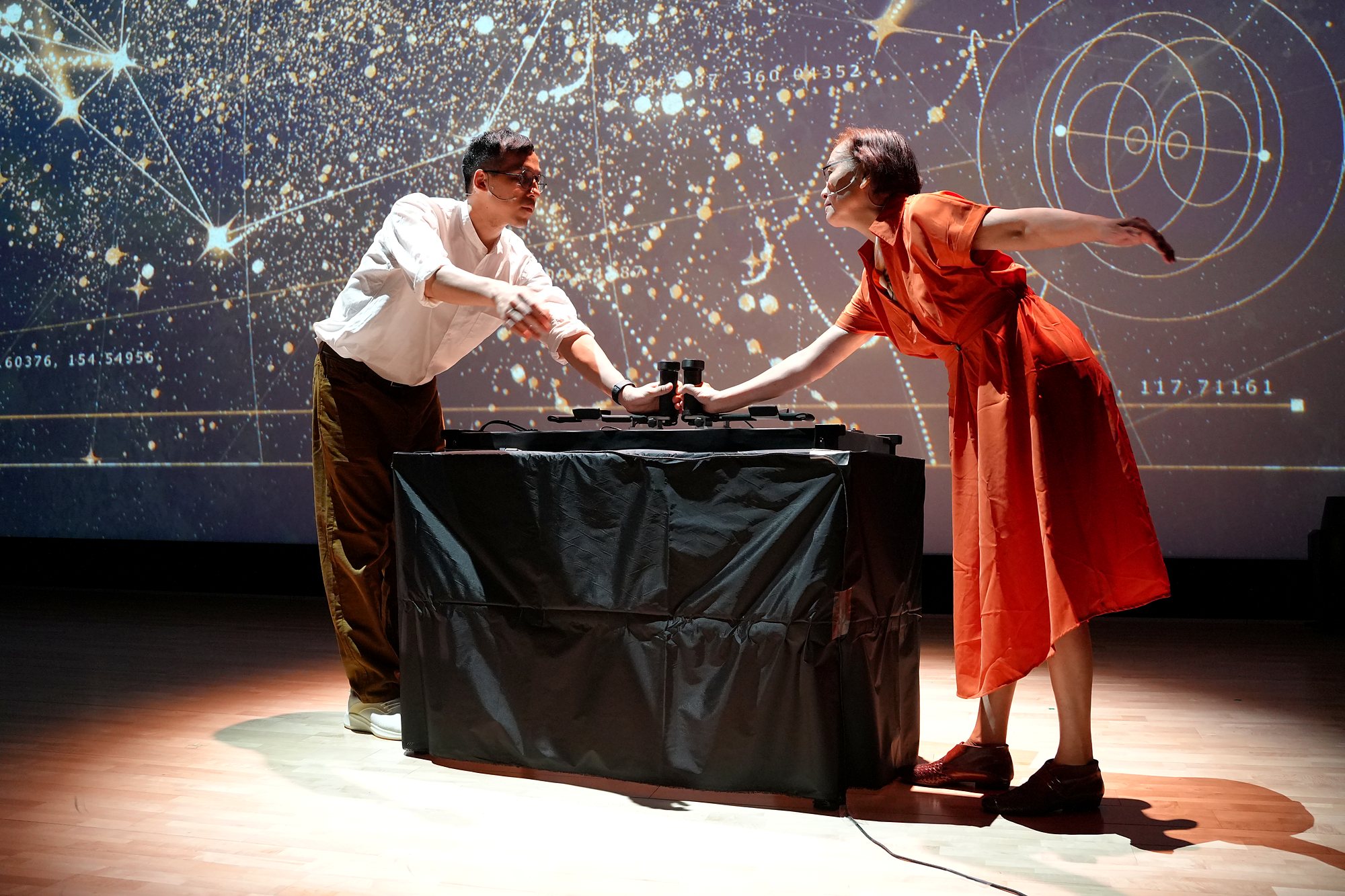
同動車現場展演
日期|2026.10.15(THU.)
時間|09:00−17:20
地點|國立中正紀念堂 演藝廳(台北市中正區中山南路21號)
Rhythmic Entanglements is a project developed by Po-Hao Chi during the Artist-in-Residence Program at the Industrial Technology Research Institute (Arts@ITRI). Starting from the body, the project explores how physiological signals—such as breathing, grip strength, and upper-limb movements—can be translated into sound. Sound becomes more than a response to movement; it also serves as a medium through which we can understand the state of our own bodies and become attuned to the rhythms of others.
Booklet Design|Fifi Hu
Illustration|Rachel Huang
During the residency, we collaborated with the Music and Motion Interactive Health Promotion Lab, ITRI. We tested sensors for breathing, pulse, muscle activity, and movement, built prototypes, and then focused on hand movement and grip, which place less burden on the wearer. The Synchronous Movement Vehicle (Synslai) is an upper-limb rehabilitation device made by Rehabotics, to which the ITRI lab added motion tracking and data logging; we then adapted it into an interactive instrument that produces sound. Through movements such as pushing, pulling, and gripping, participants can make music and experience how physiological signals are translated into sound. Physiological data, once abstract and difficult to perceive directly, thus becomes something that can be heard and experienced.
When two people operate the device together, even if they perform the same movements, their strength, coordination, and rhythms may differ. Sound brings these differences to the surface, inviting participants to reconnect with their own bodies while becoming more aware of the states and movements of others. By bringing sensing, sound, and interaction together, Rhythmic Entanglements seeks to incorporate a concern for health and well-being into artistic experiences, using workshops as spaces for exchange where people with diverse embodied experiences can participate, explore, and perceive together.
Breathing is a continuous activity of the body that often goes unnoticed. It changes with our emotions, posture, and physical condition, quietly forming a rhythm unique to each individual.
Inspired by clouds and bubbles, Rhythmic Vape is an interactive installation activated by blowing air into a device. Participants’ breath is translated into visual traces on a virtual turntable, which in turn generate melodies, rhythms, and sounds. By consciously adjusting their breathing, participants can observe how their breath transforms the visuals and listen to how it shapes the resulting sound.
When participants take turns or experience the installation together, breathing becomes more than an internal physiological process. It becomes a form of expression that can be seen, heard, and shared. Each person’s breath has its own pace, intensity, and rhythm, and these differences gradually emerge through their translation into sound and visuals.
Through this interaction, we invite participants to slow down, pay attention to their own breathing, and become more attuned to the rhythms of others.
The same movement can require different degrees of strength, coordination, and tactile judgment depending on who performs it. Seemingly simple everyday actions—gripping, twisting, pushing, and pulling—also carry traces of age, physical condition, and accumulated life experiences.
On March 12, 2026, we held a workshop at Tamsui Yishan Public Senior Day Care Center, New Taipei City. Beginning with the hand, we invited participants to trace the outlines of their own hands and share memories and experiences associated with them. From the things their hands had done throughout their lives to the changes in their bodies at different stages of life, participants began to connect seemingly ordinary movements with their own unique life stories.
These experiences may not be fully captured by sensors or measured through data alone, yet they are essential to understanding the body. How people perceive their own bodies and interact with others in everyday life encompasses much that cannot be quantified.
We therefore envision sound not merely as a way of representing physiological data, but also as a medium for connecting diverse embodied experiences and life stories. Through shared interaction, listening, and exchange, subtle differences in movement and body rhythm can be perceived and shared.
Alongside the interactive devices, we have also produced a booklet introducing the principles of sensing technologies and methods for measuring physiological data, allowing participants to gain a deeper understanding of the physiological signals behind the sounds they hear.
On October 15, we presented a lecture-performance and an exhibition tracing the project from technological development and workshop practice to artistic translation.
For the project’s final presentation, we worked with Möbius Strip Theatre and invited older adults with no stage experience to share their stories and join rehearsals; together we turned our field observations into a lecture-performance. The performance combined the Synchronous Movement Vehicle, live sound, real-time visuals, and spoken narration, translating rehabilitation movements into an interweaving of sound, images, and memories. Taking the hand as a starting point for how we perceive the world and form connections, it traced how a pair of hands keeps changing through time and experience, from a baby’s first grasp and a child learning to write to changes in grip strength and touch later in life.
Data may record changes in physical ability, yet it cannot fully capture the paths a pair of hands has traveled or the lived experiences that flow through them. When rehabilitation movements become a medium for evoking memories, the body is no longer merely an object to be measured and corrected, but also a vessel for personal experiences and a site of connection with others and the world.
Date: Thursday, October 15, 2026
Time: 09:00–17:20
Venue: Performing Arts Hall, National Chiang Kai-shek Memorial Hall (21 Zhongshan South Road, Zhongzheng District, Taipei City, Taiwan)
藝術家 Artist|紀柏豪 Po-Hao Chi
合作實驗室 Partner Lab|工業技術研究院 音樂與動作互動健促實驗室 Music and Motion Interactive Health Promotion Lab, ITRI
共同創作 In Collaboration with|莫比斯圓環創作公社 Möbius Strip Theatre、葉博允 Paul Yeh(葉家雜貨有限公司 Yehkazakka)、陳臨霜 Lin-Shuang Chen
計畫顧問 Project Advisor|賴淑君 Shu-Chun Lai
工作坊帶領、摺頁設計 Workshop Facilitation & Booklet Design|胡貽斐 Fifi Hu
插畫 Illustration|黃莉棋 Rachel Huang
互動視覺 Interactive Visuals|蕭子強 pepepepebrick
影像提供 Image Credits|美好日子電影 N&M Films、融聲創意 Zone Sound Creative、葉博允 Paul Yeh
特別感謝 Special Thanks|富伯生醫 Rehabotics、新北市淡水義山公共托老中心 Tamsui Yishan Public Senior Day Care Center、蔣冰瑤 Ping-Yao Chiang
補助 Supported by|文化部「媒合藝術家及科研單位發展科藝創新實驗計畫」Technology Art Innovation Experimental Program: Matchmaking for Artists and Research Institutions, Ministry of Culture, Taiwan
這邊的文章都滿好,有空可以多來看看
紀柏豪於工研院藝術進駐期間發展《節奏繞纏》,將呼吸、握力與上肢動作等生理訊號轉為聲音,並把復健輔具同動車改造成會發聲的互動裝置。內含摺頁電子版與 2026 科藝未來沙龍講座式表演。
計畫自2025年七月起,融聲創意 x 聲化感官實驗 與 RIXC 合作,選送三組藝術家前往拉脫維亞 RIXC 新媒體文化
